




Your basket (items: 0)
| Product | Details | Total |
|---|---|---|
|
Save
|
Bring the beauty of autumn indoors. Use code AUTUMN25 at checkout to receive 25% off!

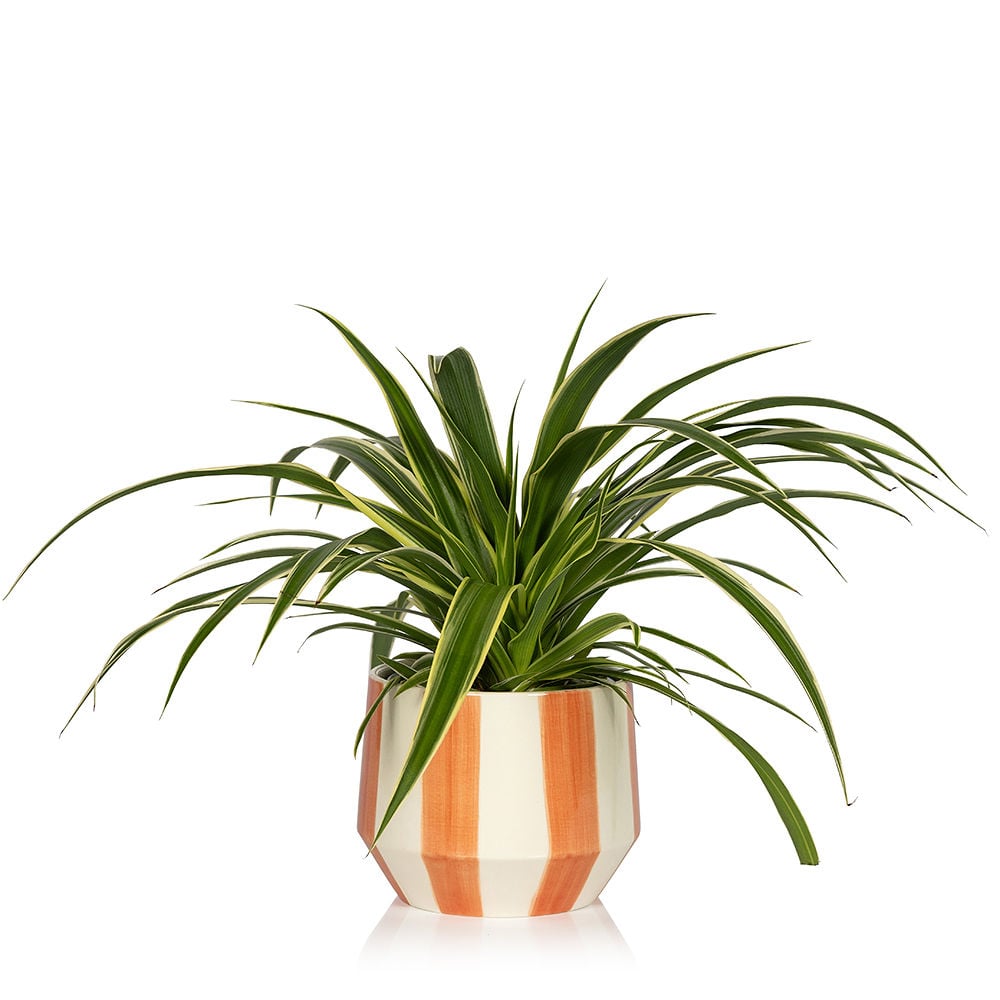
The Spider Plant is an easy-care all-rounder. With its retro 70s vibes and palm-like leaves, it’ll add serious style to your home. It’s also super easy to care for, even for plant beginners.
Did you know? Spider Plants can even produce babies which you can share with your friends and family. How fabulous is that?
Read more about the Spider Plant and why it might be a good choice for you over on our blog; A Guide to Caring for the Spider Plant.

Water your plant once a week to keep the soil lightly moist

Place your plant in a kitchen or bathroom where it will enjoy increased humidity

Position it somewhere bright to keep it happy; a windowsill is perfect. (Just avoid long periods of direct sunlight to protect the leaves)

Spider Plants only need weekly waterings. They like their soil to be damp, but they don’t like being over-saturated. Before watering your plant, check the top layer of soil. If 50% of the soil feels dry, it’s safe to give it a good drink. Drain any excess water that’s accumulated at the bottom to prevent the roots and leaves from rotting.
Place your plant in a humid bathroom or kitchen, or mist the plant occasionally to keep it hydrated. Spider Plants also enjoy warm temperatures, so position it somewhere bright and sunny, being careful to keep it out of direct sunlight.

We often get asked, why is my spider plant not producing babies (aka pups)? The plant needs to be mature enough to do this (a bit like us humans) but also the conditions need to be correct. Give it more room in its pot. If it’s looking crowded, it will need repotting.
Ensure it is getting adequate light and moisture. The time of year is also important, a spider plant needs approximately 12+ hours of light a day to produce pups, so this will not happen during autumn and winter.

Less is more when it comes to the Spider Plant. Try not to fuss around with this plant – even if this goes against your natural plant care instincts. If in doubt, under-water your plant and slowly and gradually increase the amount of moisture you provide if it seems a little dehydrated. Your spider plant will even tell you if it’s really thirsty, as the green stripy leaves will look dull and grey in colour. This is the plant telling you it urgently needs a drink.
If you don’t mist your plant regularly or place it somewhere with enough humidity, the leaf tips may turn brown. You can trim these off, but try giving your plant a spritz to keep the leaves healthy.
Spider Plants also don’t like being cold, so keep yours away from draughts or chilly rooms that don’t get much sunlight. Not enough light will also slow down growth and potentially fade the striking stripes on its leaves.
Q: How often should I water a Spider Plant?
A: Water when the soil feels dry to the touch. Keep it slightly moist, but avoid letting it sit in water.
Q: What light conditions does a Spider Plant prefer?
A: Bright, indirect light is ideal. It tolerates lower light, but growth may slow and variegation can fade.
Q: What temperature range is ideal for a Spider Plant?
A: Keep it between 15–25°C. Protect from frost and sudden cold drafts.
Q: How do I prune a Spider Plant?
A: Trim brown tips and remove dead leaves. You can also snip off baby plantlets to propagate or keep tidy.
Q: Are Spider Plants toxic to pets?
A: It’s non-toxic to cats and dogs, though some pets may nibble and get a mild upset stomach.
Q: How do I propagate a Spider Plant?
A: Use the little plantlets (“spiderettes”). Pop them in water or soil until roots develop—they’ll soon be mini Spider Plants!
Q: Does a Spider Plant need fertilising?
A: Feed monthly in spring and summer with a balanced liquid fertiliser. Reduce or skip feeding in autumn and winter.
Q: Can Spider Plants grow outdoors?
A: Yes, in frost-free spots or during summer months outdoors. It’s primarily an indoor favourite in the UK.
Q: How do I prevent pests on a Spider Plant?
A: Watch for aphids or spider mites. Wipe leaves and use insecticidal soap if needed.
Q: How often should I repot a Spider Plant?
A: Every 1–2 years, or when roots start crowding the pot. Use a well-draining soil mix for best results.
As Seen In


Tag us @thelittlebotanical


Save your favourites - log in to add items to your wishlist


